This was originally written on June 12, 2020 and published on LinkedIn. I’ve decided to move the posts here for better searchability. Those that know me well, know that I am a video game history researcher, and this is just some of my random published articles.
Although video games have followed a history of being primarily dominated by companies originating from both America (e.g. Atari, Microsoft) and Japan (e.g. Nintendo, Sega, Sony) with indications of their history being straight forward and memorable, smaller niche-oriented occurrences and affairs have often evaded the public’s perception of video games. Whereas the public has willfully taken in the hegemonic viewpoint that video games originate nearly solely from these countries, a critical assessment shows that this perception is incorrect; video games have originated from a broad range of countries, many of which have directly impacted the operations of the dominant creators. By looking at these operations outside of the spectacle of the dominant viewpoint, a better understanding about the penetration of video games around the world can be understood, while also the smaller cultures that have both been impacted by video games; and likewise, the video games that have been impacted by these smaller cultures, can be better understood. In this essay, I will outline how game histories outside of the American/Japanese spectacle are beginning to offer insights into smaller countries’ offerings for video games, and how due to marginalization by fans and researchers, certain countries and cultures have been ‘forgotten’ in terms of penetration of video games.
Video games are today considered the products of primarily American and Japanese developers, with other countries believed to be smaller, ‘indie’ based contributors to the global market. Assuming this were true, it would therefore follow that only these dominant cultures have offered to affect the creation of video games worldwide. However, in reality and in a historical point of view, this viewpoint is largely incorrect, and neglects the influence of ‘other’ developers’ contributions to the global stage as we know it today. Using Nintendo’s early operations from the late 80s to the mid 90s as an example, it can be shown that despite recent declines in developers outside of America and Japan (‘the big 2’), video games were globally influenced, and not limited to just America and Japan. This implies that although there is currently a downturn in ‘foreign’ developers, their contributions in the past have played an important role in the development of video games as we know them today.
Oliver Perez Latorre says that of European video game history, it is surprising the lack of focus on European companies or products, despite their prestige that they have built over the years (Latorre, 2013). Indeed, given that Europe’s (and more specifically Britain’s) relationship with video games have contributed so much to video game design, and in particular British Culture (Donovan, 2015 p. 586), it is of course surprising that little focus is put onto the industry, such as its popularization of both isometric-style games, and open-world video games such as Grand Theft Auto III (DMA Design, 2001) (Donovan, 2015). Donovan perhaps offers some insight into why it may be that British video games are ‘forgotten’ as ‘being British’ in the public eye: “the focus on the international audience has meant that most British-made games are now indistinguishable from the games being produced in the United States” (Donovan, 2015, p. 586), which suggests due to the global nature of video games, a more US-centric approach to developing games has to be taken to generate enough interest around the world, which in part, has subdued the ‘British-ness’ of British games. Although this may be true in a direct sense, it cannot be said for the past influences of British developers on game development today; today’s ‘American games’ are undoubtedly influenced by British-made games, as Donovan himself states in the example Grand Theft Auto III – a game that would by today’s metric be considered ‘American’ by gameplay. Latorre continues discussing the influence of British developers in terms of their home success, such as the ZX Spectrum microcomputer’s release and subsequent development studios that were established to respond to the system and create games for consumers, for example, Ultimate Play The Game (Latorre, 2013) and argues that the major development in British video game creation is that of international successes coming out of the country, such as Populous (1989), which as he describes, put Britain on the map for video games (Latorre, 2013); “Britsoft”, as it’s commonly described as. Given Latorre’s evidence, British developers have shown to have a competitive history in video games up until the early 90s. However, Latorre continues, discussing how the early 90s seemed to be a turning point for British developers, with them becoming increasingly irrelevant to their Japanese and American counterparts: “In the 1990s the main titles in Japanese video games came from the already veteran developers Capcom and Konami” (Latorre, 2013, p. 143), as he puts it. However, despite this assertion, and his original goal of raising awareness of British video game history, Latorre seems to neglect a whole decade’s work and influence of British gaming culture.
When Nintendo released its flagship console the NES in Japan, and then in America, it was under the pretense that only Japanese companies were to be granted an official developing and publishing license which would allow them access to Nintendo’s production line for games released for the console. In 1986, the British company Ultimate Play the Game was given permission by Nintendo to develop for the system, despite reluctance due to their foreign presence (Jones, 2010). Ultimate continued to develop for Nintendo for many years ahead, while Nintendo slowly opened up its system to other developers outside of Japan; developers, were given the opportunity to work with the company. As Nintendo released other consoles over time, more and more developers signed onto contributing to the systems. Latorre’s claim that during the 1990s it was Japanese developers Capcom and Konami contributions that played the main role for Nintendo (Latorre, 2013) is inherently false however, and is in fact an example of indeed what he writes about; the loss of cultural identity forgotten due to time. In reality, British developers were contributing immensely to Nintendo games during the 90s, perhaps more than any other single country; games such as R.C. Pro-Am and Battletoads for the NES, both developed by Rare (formerly Ultimate Play the Game and Rareware) saw huge successes, and games for the SNES such as Killer Instinct and Donkey Kong Country, both also developed by Rare, were massive hits. Other British developers, such as Argonaut, who released Star Fox (Starwing in Europe), cannot be forgotten. In fact, by 1994, 40% of Nintendo games were being developed by British companies (Dinsey, Hayes, & Parker, 1995), with developers from the USA making up little of Nintendo’s portfolio; a stark contrast to the assumption of American and Japanese hegemony in video games in the 90s. Given that British developers accounted for the vast majority of Nintendo games, it naturally follows that British developers helped morph Nintendo’s activities, and public perception of video games themselves, based on British culture. Perhaps one of the best examples of this is Rare’s, GoldenEye 007 (Rare, 1997) game for the Nintendo 64, based on the British film GoldenEye (Campbell, 1995). The game itself was a critically acclaimed success, winning various awards such as a BAFTA; much more importantly, however, is that it showcases the contributions of British developers to video games as we know them today. On reflections on the game from readers of the gamasutra blog, respondent Fort (cited in Cifaldi, 2006, p. 7) commented that GoldenEye 007 “started the influx of console-based shooters we see nowadays”, and “opened the genre to a completely new market.” Given this comment and the general admiration for the game, it is clear that Rare’s contributions to video games goes beyond just the 80s, and their work affects video games as we know them today.
As demonstrated, taking a careful consideration into the origins of video games shows that these products are more than just Japanese and American, with Britain bringing a large cultural influence to video games in both history, but also in the present through the creation of genres and practices as evidenced by GoldenEye 007’s revolutionary affects on video games. By neglecting to consider developments outside of the now-hegemonic view of video games being American and Japanese, we lose both the cultural identity that has arisen from these locales, and also the ability to conduct a proper reading of video games as it neglects to properly consider the origins of practices and types of creations that are now common place.
Much like the how developers and cultural contributions outside of America and Japan have been brushed off as unimportant, the cultures that have been affected by video games have also been forgotten. Both researchers of video games and the general public have co-operated in the neglection to consider video games outside of a traditional narrative of products being only available to richer (or first world) countries such as those in Europe, Japan, America, and Australia. Whereas some academics have looked to critically analyze the stereotypes of ‘gamers’ such as the whos, hows, and whats (Shaw, 2010) of video game cultures, these have primarily been in response to the aforementioned richer countries, without regard to critically analyzing the origins of gamers themselves outside of the traditional landscape of these richer countries, let alone the environments these products are being consumed in, on a global socioeconomic scale. This outlook of interest on only the ‘traditionally dominant’ cultures forms a problematic misconception that video games must have only affected these aforementioned dominant cultures. By analyzing these smaller cultures, it is possible for us to begin to understand why it is that certain locales have been neglected due to the assumption of either their irrelevance or insignificant, and as detailed, has in turn acted as a force of marginalization of ‘lesser’ cultures by both researchers and fans alike, with each of these groups playing an equal role in this process. Likewise, it opens up the realm of understanding the diverse cultures that video games have affected and which have played part in building around the world, irrespective of preconceived conceptions of traditional video game players.
Traditional research into video game history in terms of market availability and product creation has often been left up to consumers and fans to self-document occurrences in the timeline of video games – an issue realized by one research group, noting that “knowledge about the history of digital games is currently held by the games community” (Stuckey, Swalwell, Ndalianas, De Vries, 2013) – by means of archival pieces restricted to their private collections such as advertisements, newspaper clippings of the time, and contact with industry veterans, with ‘official’ researchers (read: academics) more concerned about the implications of video games in their historical context and generally little overlap between private collectors and researchers. Indeed, although researchers are mostly concerned about the implications of video games, these ‘unofficial’ historical accounts (which may be considered the products of citizen journalism) that have been written by fans play an integral part of focus on their work. This assertion is further established by Navarro-Remesal, who aptly describes this phenomenon of fans acting more verbose than researchers – “fans may be less reliable as historians but, at the same time, they engage with and record aspects of the history of [video games] that are usually left behind by official institutions” (Navarro-Remesal, 2017, p. 128). Navarro-Remesal also discusses the environment in which ‘fan journalism’ happens, and notes that there is no single ‘gaming community’ as such (Navarro-Remesal, 2017); Webber too discusses this in terms of journalism, and says that journalism’s role in creating history and memory is not that of a global scale, but rather limited to within a specific community, or rather, ‘region’ (Webber, 2017). In fact, this is true especially in a historical context of video games, which saw different ‘regions’ (mostly limited in terms of country, however sometimes in terms of arbitrary sets of countries such as ‘Asia’) receive products with great disparity between one another – video game news and discussion in America would likely have no relevance elsewhere. Considering this, and applying it to video games, it becomes no surprise that video game history has not been considered outside of the realm of larger nations and regions; fans have not initiated the discovery of these products, and thus, official researchers have not built upon this in their research. Indeed, this is further exemplified by Laine Nooney (cited in Niccol, 2017), who concedes that game history focuses on physical products rather than the experiences or history surrounding the products and that it is official researcher’s jobs to look beyond the objects, and rather at the contexts and bodies surrounding them. Furthermore, although Niccol (Niccol, 2017) states minor game histories should not be defined as ‘negative’ or ‘bad’, it is sometimes in fact the inverse that is the case; the ‘bad’ that defines the minor game history – i.e. the negative connotation of a region makes it a ‘minor.’
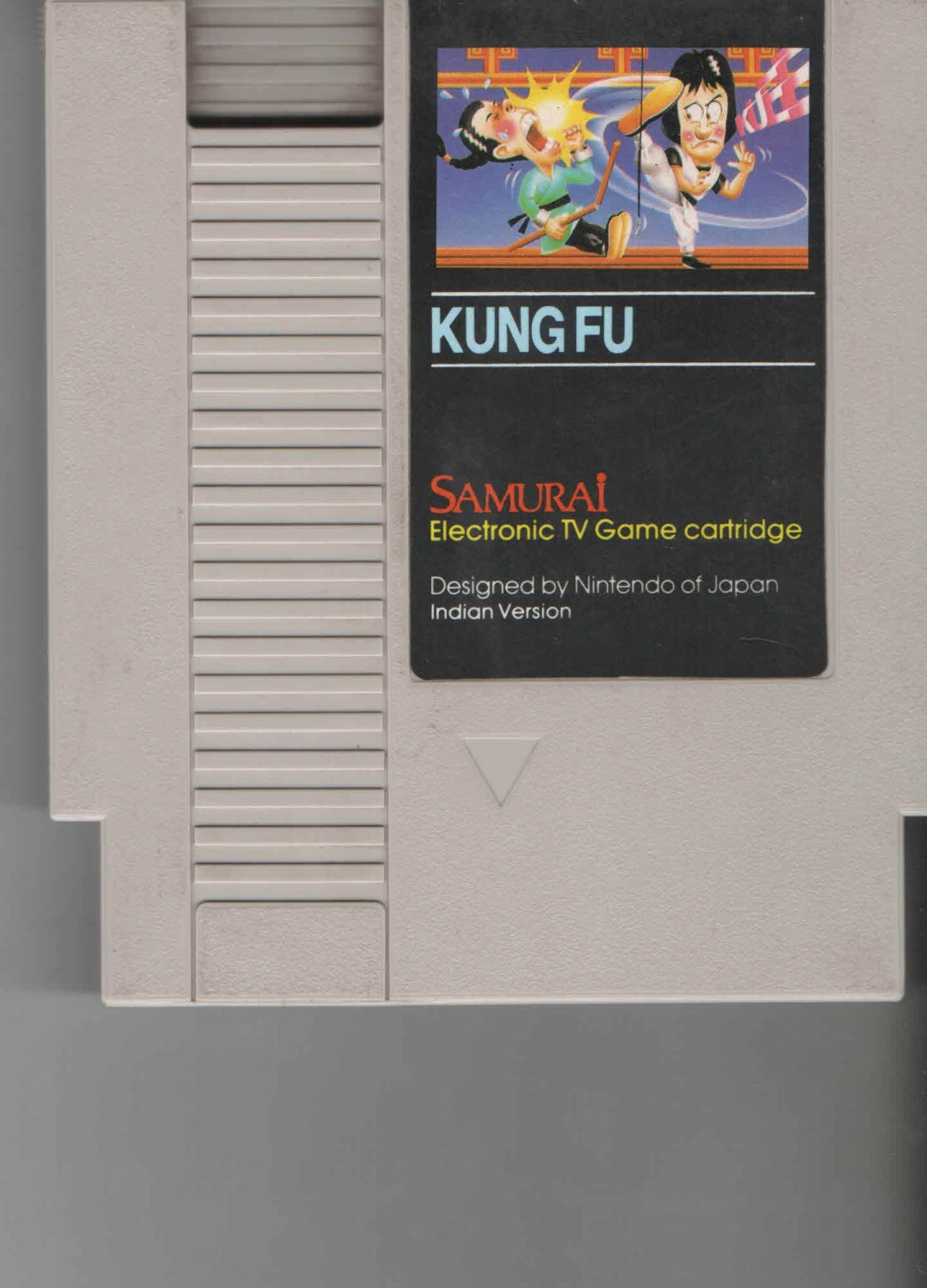
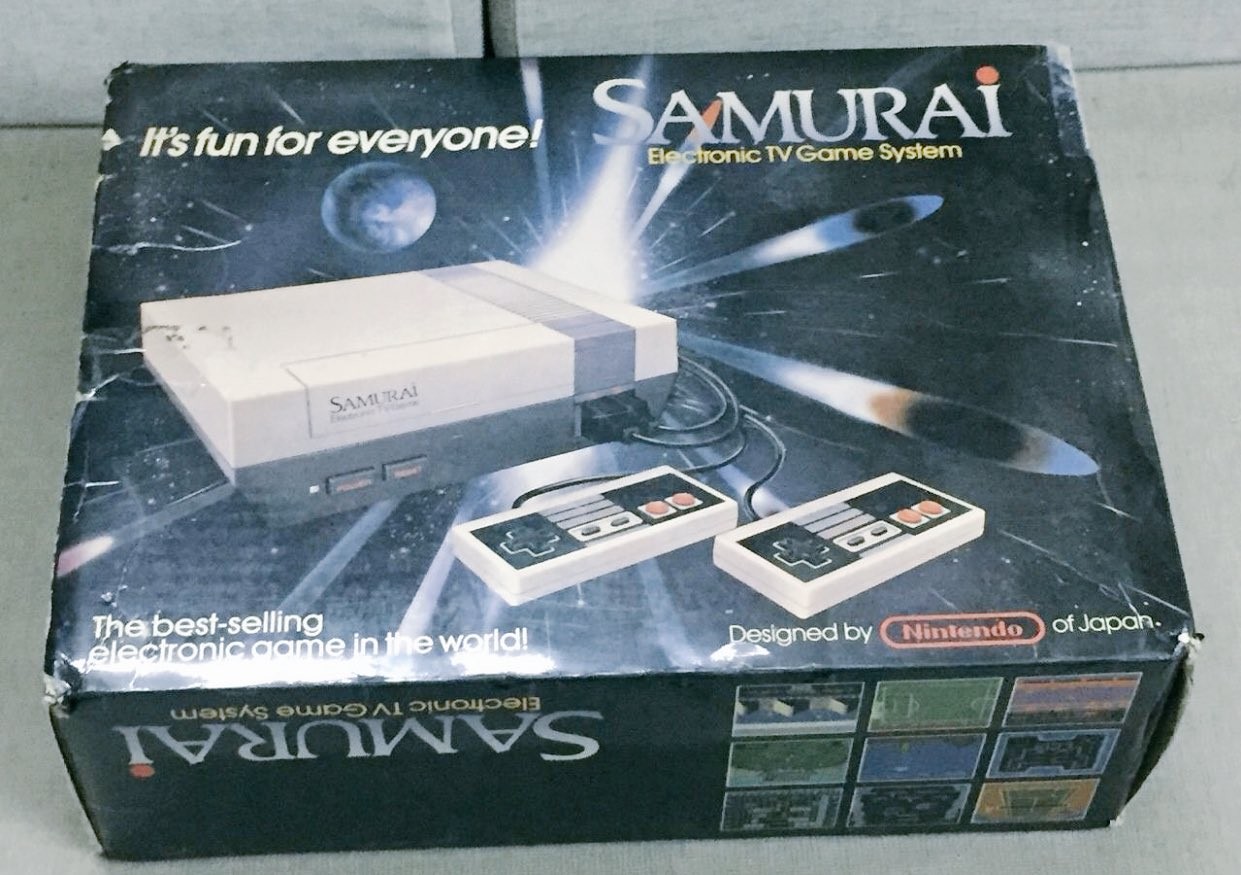
Although there are many examples one can choose from of researchers – both official and unofficial – neglecting certain regions’ history in involvement of video games, the example of India is perhaps most notable. Indeed, India’s relationship with video games in a historical context is complicated; in an official discourse, there is very little discussion about video games in India in general, and of that which does exist, it is mainly concerned with games developed in the country from the 2000s, and is unable to offer much insight into prior activities, as Souvik Mukherjee writes: “the history of video games in India is difficult to document. The early days are largely undocumented and not many people remember earlier games” (Mukherjee, 2015, p. 237). Although Mukherjee is not incorrect in his assertion that it is difficult to document early history, this statement seems to even be limited to the late 1990s, with an example of the oldest video game originating from India being from 1999. Unpacking what Mukherjee says offers an interesting insight into the way game history has developed: by his declaration, the “early days” of video games in India are undocumented. By “undocumented”, Mukherjee is in fact referring to undocumented by the public, for which he can then extend knowledge upon; in reality, there is a vast history of video gaming in India, extending all the way back to the 1980s; however, little interest has been put into collecting this information and creating a linear timeline by fans due to preconceptions of the country. One such example focusing on the Indian market, is a post on the NintendoAge forum – a website dedicated to Nintendo collecting discussion – from a user in 2011 who posted a photo of an official Nintendo cartridge purportedly coming from Indian, which was initially brushed off as a bootleg due to its origins (willis82, 2011); again in 2014, a discussion about these cartridges began, with one user asserting “you know, Quality Control isn’t exactly a top priority when it comes to India” (jhayward1283, 2014). This brushing aside of India due to the biases and preconceived perception of “lack of quality control” shows how fans marginalize these markets without respect, despite their official presence and history-rich video gaming culture, and in contrast to Niccol’s assertion, shows that a minor game history becomes minor due to the ‘bad’, and not the other way around. In turn, this ultimately leaves official researchers without much to base their research on; Wikipedia, for example, offers just one sentence in relation to Nintendo in India, which purely states that “Samurai India [..] [was] licensed to sell [the Nintendo] under the brand “Samurai” in 1987 [..]” (Nintendo Entertainment System hardware clone, n.d.) – this text, however, is in an article in relation to hardware clones, with little regard to the official status of the system itself. These assertions of India being a tiny market, full of low quality control, and little impact, are inherently false however: indeed, as the Wikipedia article states, Samurai India was licensed to sell the Nintendo in 1987, but it is much more complicated than this. India was the third region outside of America and Japan to officially receive the Nintendo system, with only Scandinavia and ‘Asia’ (as defined by Nintendo) to receive it beforehand. Unlike these other regions however, India’s trade restrictions meant that an Indian company had to manufacture the product. In Samurai’s case, Nintendo shipped Samurai parts, and Samurai assembled the systems, and printed boxes in their Northern Indian manufacturing plant. The systems sold well from 1987 until 1993, when bootleg consoles and games began to be sold under the Samurai name – without Samurai’s permission – in the country (M. Toshniwal, personal communication, October 14, 2017). In fact, Samurai was selling 3,000 units per month from 1987 up until 1993 (M. Toshniwal, personal communication, October 14, 2017); in contrast, the system was selling at less than 600 units per month in the UK in 1989 (Dinsey, et al., 1995) – a considered ‘boom period’ for the console in certain regions of the world. Samurai introduced the home video game concept to the Indian market, with hundreds of unemployed youth being utilized to market the console, and with consoles beginning to be rented through rental stores, before being sold to consumers directly.
 |
|---|
| An Indian Version Samurai Nintendo NES Game. An official licensed Nintendo product. |
Despite all of these occurrences in India, Indian video game history is still brushed aside as ‘dirty’, ‘small’, and ‘hard to document’, whereas, as shown, it is in fact rich in history and easily documented; the CEO of Samurai, who is easily contactable online, has however never been contacted about his work previous to 2017 (M. Toshniwal, personal communication, October 14, 2017); i.e. neither fans nor researchers have offered sufficient interest in this market to generate proper research which both parties can build upon, due to the shown perception of insignificance. By extrapolating this to further around the world, it shows that if an independent stance on research – one which doesn’t rely on the public to begin the research, and one which doesn’t incorrectly dismiss cultures’ presence based on prejudice – a better conversation about video games around the world can be had, without relying on a ‘good’ or ‘bad’ history.
 |
|---|
| An official Samurai Nintendo NES Console. Licensed Nintendo Product. |
It has been shown that while analyzing video game histories, the roll of countries traditionally being thought of as minor in both consumption of video games such as Nintendo in India, and general game development contributions such as in Britain, is incorrect. Although video games are largely believed to be American and Japanese products with first-world countries being their main audience, they are instead global products with many cultures affecting them, and many cultures being affected by them. This attitude has, as shown, leeched into official research of video games, by way of the building upon research done by fans, and their preconceptions of these traditional narratives, which has left gaps and misrepresentation in the history and research of video games around the world. To compensate for this, both researchers and the public must reflect on their preconceived viewpoints of video games and take a neutral stance in their research, and focus on the truth, rather than what is convenient and follows the hegemonic viewpoint of video games around the world.
References
Campbell, M. (1995). GoldenEye. United Kingdom: Metro-Goldwyn-Mayer.
Cifaldi, F. (2006, September 1). The Gamasutra Quantum Leap Awards: First-Person Shooters. Retrieved from https://www.gamasutra.com/view/feature/130249/the_gamasutra_quantum_leap_awards_.php
Dinsey, S., Hayes, M., & Parker, N. (1995). Games war: Video games-a business review. Bowerdean.
DMA Design. (2001). Grand Theft Auto III [Video game]. New York: Rockstar Games, Inc.
Donovan, A. (2015). Globalization: The UK Games Industry from the Mid-1990s to the Present Day. In Iwatani, T., & Wolf, M (Eds.), Video Games Around The World. (pp. 579-590). MIT Press.
jhayward1283. (2014). Rad racer Indian version. Retrieved from http://nintendoage.com/forum/messageview.cfm?catid=5&threadid=139340
Jones, D. (2010). A Rare Glimpse. Retro Gamer, (84), pp. 34-5.
Mukherjee, S. (2015). INDIA. In Wolf, M. J. & Iwatani, T (Eds.), Video Games Around The World. (pp. 235-248). MIT Press.
Navarro-Remesal, V. (2017). Museums of Failure: Fans as Curators of “Bad”, Unreleased, and “Flopped” Videogames. In Swalwell, M., Stuckey, H., & Ndalianis, A (Eds.), Fans and Videogames: Histories, Fandom, Archives (pp. 128-145). Taylor & Francis.
Niccol, B. (2017). DiGRA Conference. Forgotten, failed, or overlooked? Towards a critical understanding of ‘minor’ game histories. (pp. 1-3). Retrieved from http://digra2017.com/static/Extended%20Abstracts/76_DIGRA2017_EA_Nicoll_Forgotten_Games.pdf.
Nintendo Entertainment System hardware clone. (n.d.). In Wikipedia. Retrieved October 24, 2017, from https://en.wikipedia.org/wiki/Nintendo_Entertainment_System_hardware_clone
Pérez Latorre, Ó. (2013). The European videogame: An introduction to its history and creative traits. European Journal Of Communication, 28(2), 136-151. http://dx.doi.org/10.1177/0267323113477365
Rare. (1997). GoldenEye 007 [Video game]. Japan: Nintendo Co., Ltd.
Shaw, A. (2010). What Is Video Game Culture? Cultural Studies and Game Studies. Games And Culture, 5(4), 403-424. http://dx.doi.org/10.1177/1555412009360414
Stuckey, H., Swalwell, M., Ndalianas,. A., & De Vries, D. (2013). IE’ 13. Remembrance of games past: the popular memory archive. (pp. 1-7). Retrieved from https://dl.acm.org/citation.cfm?id=2513570.
Webber, N. (2017). Eve Online’s War Correspondents: Player Journalism as History. In Swalwell, M., Stuckey, H., & Ndalianis, A (Eds.), Fans and Videogames: Histories, Fandom, Archives (pp. 93-110). Taylor & Francis.
Willis82. (2011). Gradius. Retrieved from http://nintendoage.com/forum/messageview.cfm?catid=29&threadid=55437