This was originally written on July 10, 2020 and published on LinkedIn. I’ve decided to move the posts here for better searchability. Those that know me well, know that I am a video game history researcher, and this is just some of my random published articles.
The 1990s were undeniably some of the most exciting times of gaming history.
With the release of the Gameboy (and later on Super Nintendo), and the Sega MegaDrive (Genesis), a cultural shift was being seen around the world. Nintendo in America, for the first time since its release of the NES in 1985, was seeing fierce competition by Sega, with the so-called console-wars fully under-way. Millions upon millions of dollars were being poured into advertising campaigns to entice both children and adults to choose the sacred question: Are you a Sega, or a Nintendo?
In England, however, things weren’t exactly the same. Since the release of the NES in the country in 1987, Nintendo had tried meticulously to crack the British market, alas to little fan-fare. Sega, on the other hand, who had also entered the British market in 1987, was seeing successes far exceeding expectations.
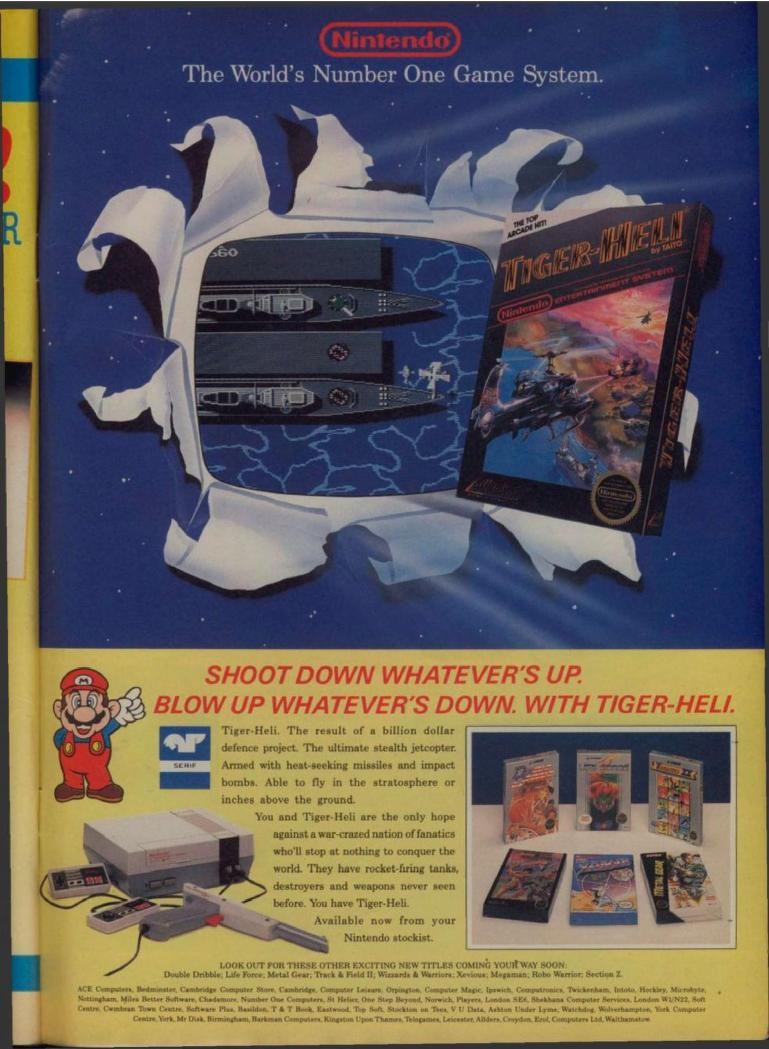 |
|---|
| December 1989 Nintendo NES Advertisement. |
With few games available for the system, Nintendo’s flagship console, the NES, saw few sales. Classics such as Castlevania, which saw American releases in 1987, took over two years to be released in the country.
Nintendo was also plagued by calls within the industry of unfair business practices, especially compared to those seen by microcomputer developers.
To put it simply, when it came to consoles: In England, Sega was in, and Nintendo was out. There were many reasons for this. Mainly, Nintendo ignored the market demand in England and instead tried to control it using tactics that had worked in Japan and America. However, to make a long story short, British consumers desired more than just cheap gimmicks and restrictive, dated-software.
 |
|---|
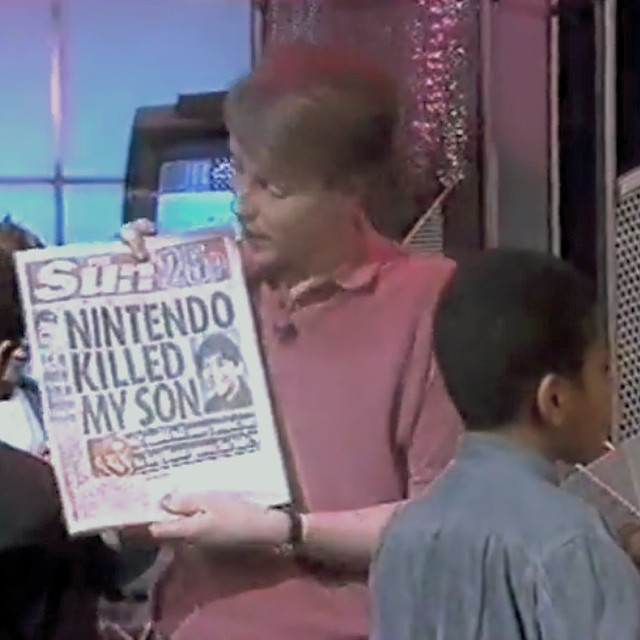
| Nintendo Killed My Son! |
Due to Sega’s success over Nintendo in the British market, it is quite interesting to look at the operations of these companies and examine their marketing techniques, especially as Nintendo began to be a serious player in the British market.
1991 saw both Nintendo and Sega take different approaches to the market, which ultimately edged both companies to approximately 50/50 market-share (this figure includes the insanely popular Gameboy.) Following these changes, constant tit-for-tat releases by both companies criticized the other for ‘utilizing’ their counter-parts marketing campaign. While Sega was shifted from brand-focused advertising campaign to a software-based advertising campaign - in line with Nintendo - Nintendo was accused of pouring millions of Pounds into buying advertising space for young adults, rather than children as it had traditionally done. At the time, the marketing manager of Sega’s British operations (Virgin Mastertronic) was even quoted saying “we were F***ing clever in not putting all our money against kids’ programmes and BARB[Broadcasters Audience Research Board] figures bore that out.”
To counter Nintendo’s access to the young adult advertising space, which was also focused on showcasing both brand recognition and software, Sega decided to once again do something quite different. In late 1991, Sega, in partnership with the WCRS advertising agency, created “Jimmy”.
[Embedded video: “SEGA Megadrive Console Advert”]
Jimmy was a real-life hero. A cool guy, “not who you wanted to be, but who you wanted to grow up to be.” Jimmy had a life. But he also had gaming skills. Most importantly, he was always able to “get the girl”.
The Jimmy campaign continued for three years. Clips upon clips of Jimmy, played by actor Peter Wingfield, were beamed onto the televisions of British children, filled with references to whatever Sega and WCRS thought was “cool” in the country.
[Embedded video: “Sega Mega Drive UK Advert - 1 - 1992 - To Be This Good Takes Ages - HQ”]
Nintendo attempted to counter Sega’s advertising efforts, but to little avail. Product commercials, most of which were simply adaptations of American material, were ineffective at creating a brand which consumers would remember or adore.
Thus far, we’ve seen how Sega’s “Jimmy” parlayed the typical “cool guy” persona into huge success, but there was of course more to Sega’s advertisement than just that. In fact, Sega and Nintendo’s battle in England perhaps spurred one of the most creative advertising campaigns in video game history.
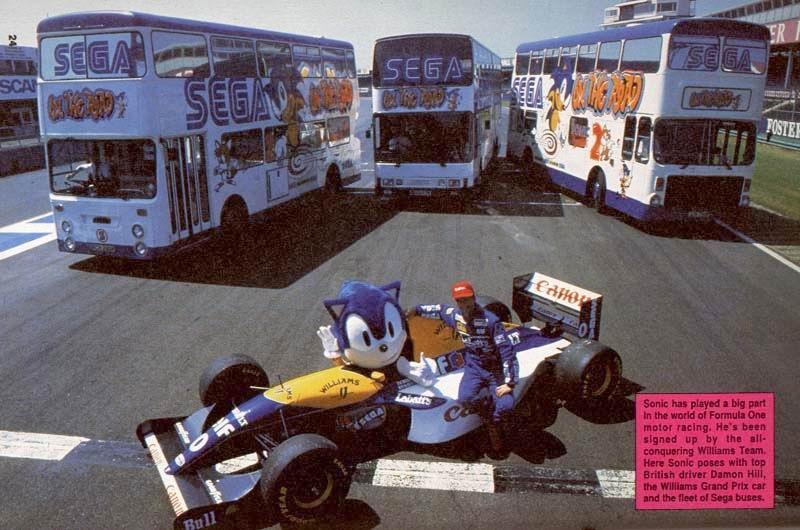
In 1990, Sega began its newest advertising campaign, and arguably, its most exciting: The Sega On the Road Bus.
 |
|---|
| Sega On The Road Buses. |
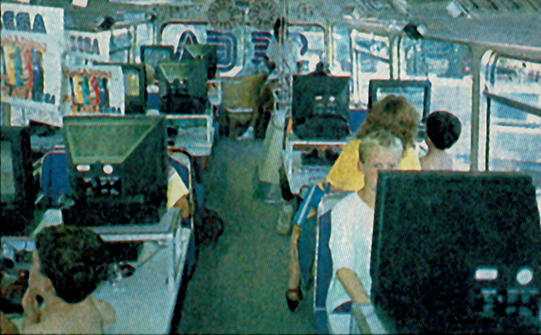
A Double-decker bus, filled with consoles, games to play, and prizes to win, it would drive all around England promoting Sega and its products.
 |
|---|
| Inside Sega On The Road Bus. |
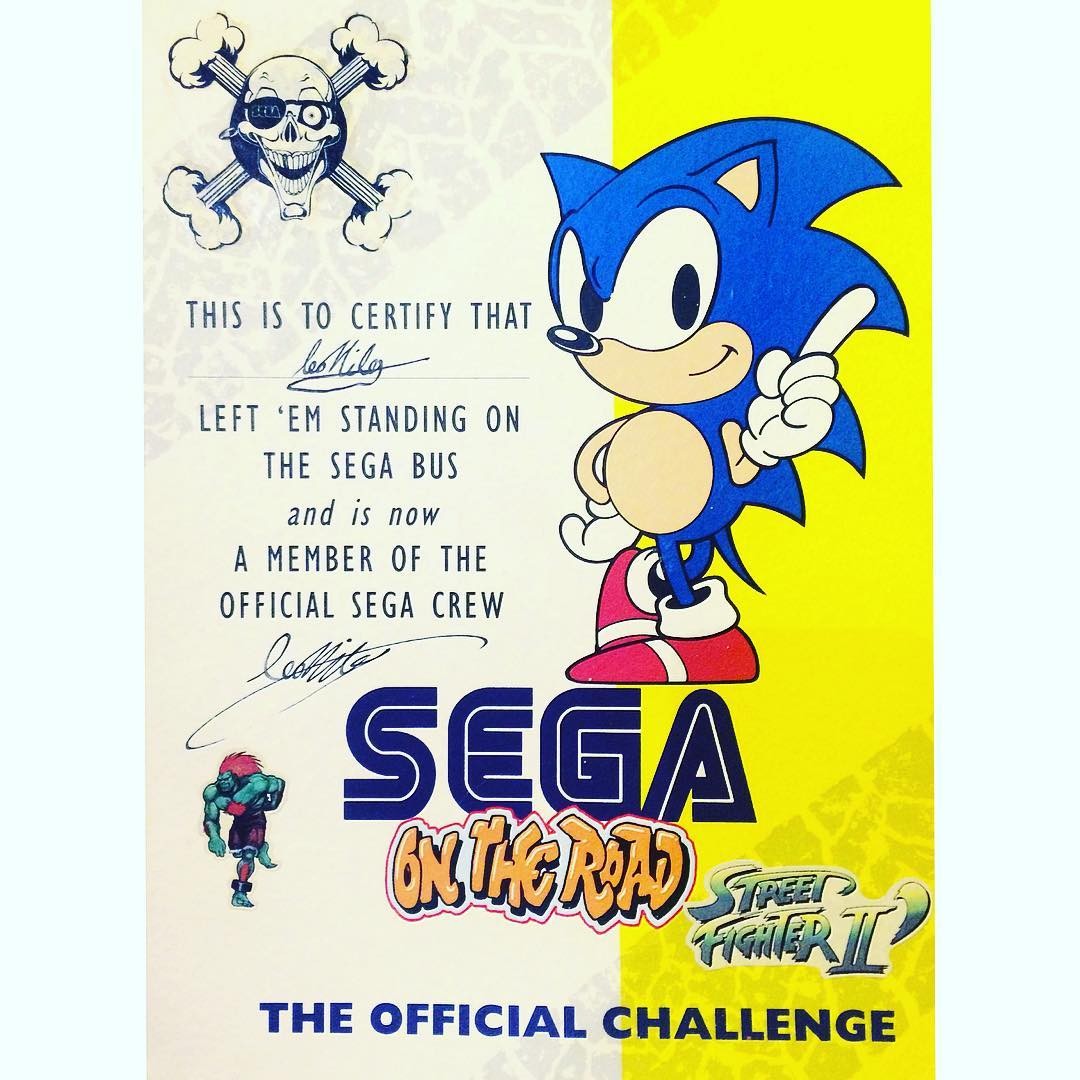
First there was one, then there was two. In 1993, a third bus was also introduced. The buses toured carnivals, schools, and even pre-arranged spots which were announced in magazines, on radio, and on television.
 |
|---|
| Sega Crew Official Challenge Bus On The Road. |
Youtuber ‘Badnik Mechanic’ goes into great detail about these bus tours, albeit he does miss the mark on some things.
Namely, Although there were three buses, only two were ever on tour. One for the north, and one for the south of the country.
[Embedded video: “The History Of The Sega Roadshows!”]
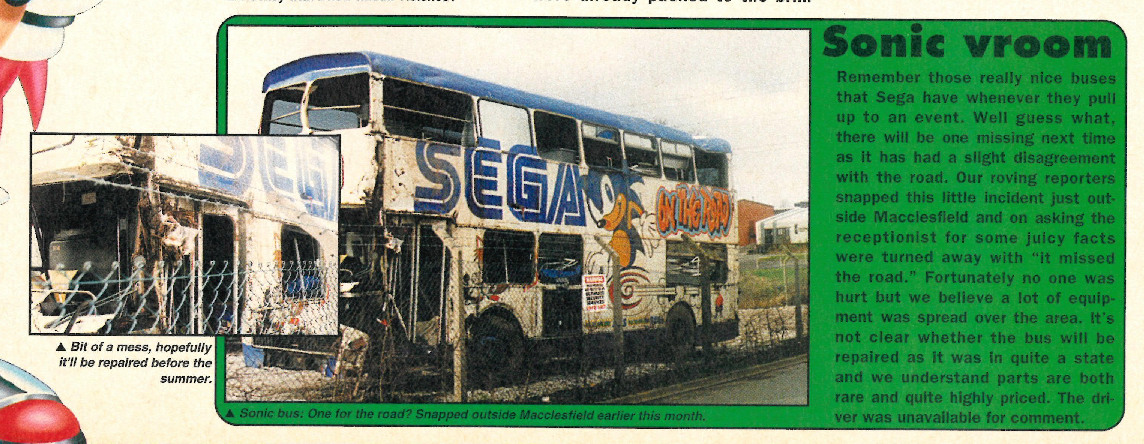
Likewise, for those interested, THIS is what happened to one of those trucks..
 |
|---|
| Sega On The Road Bus Crash. |
Sega wasn’t alone in utilizing on-the-road tours, however. In 1993, Nintendo looked to fight back. With Sega’s buses running for three years already, it was time for Nintendo to step up to the, ehm well, challenge.
The Nintendo Challenger
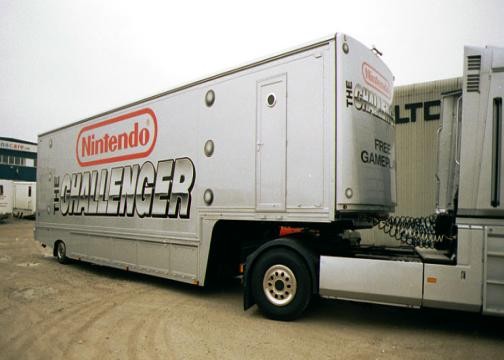
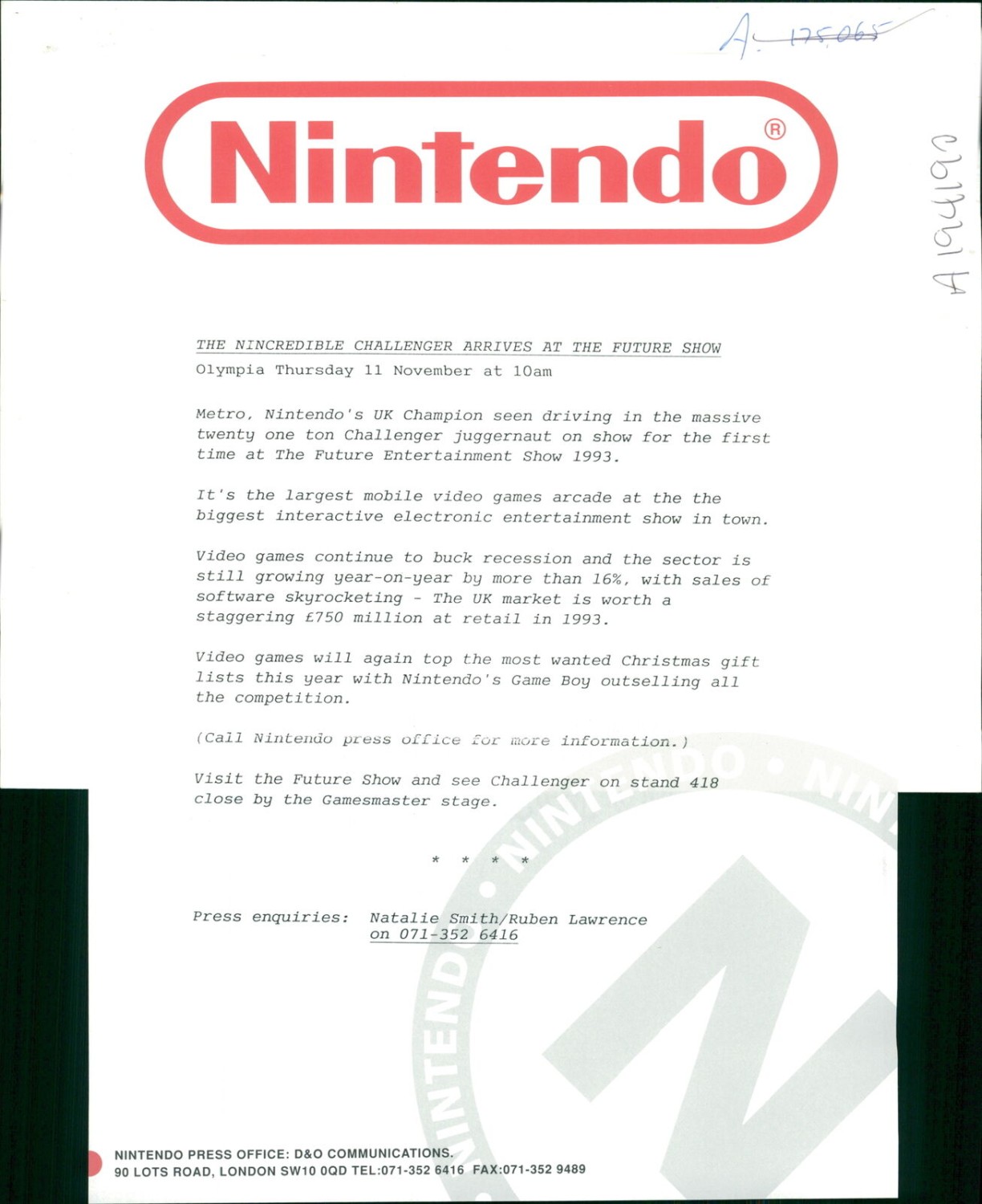
On the 11th of November 1993, the aptly named “Nintendo Challenger” was revealed to the world. It wasn’t a bus, however. It was a truck.
 |
|---|
| The Nintendo Challenger Truck. |
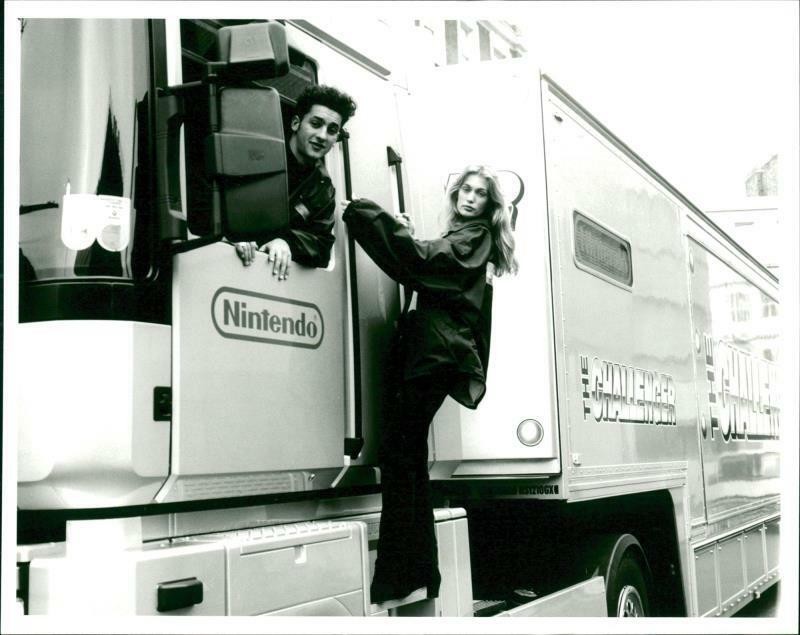
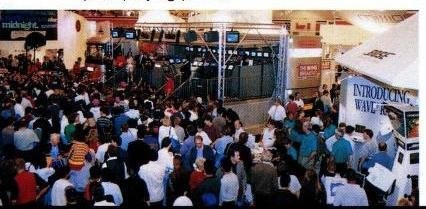
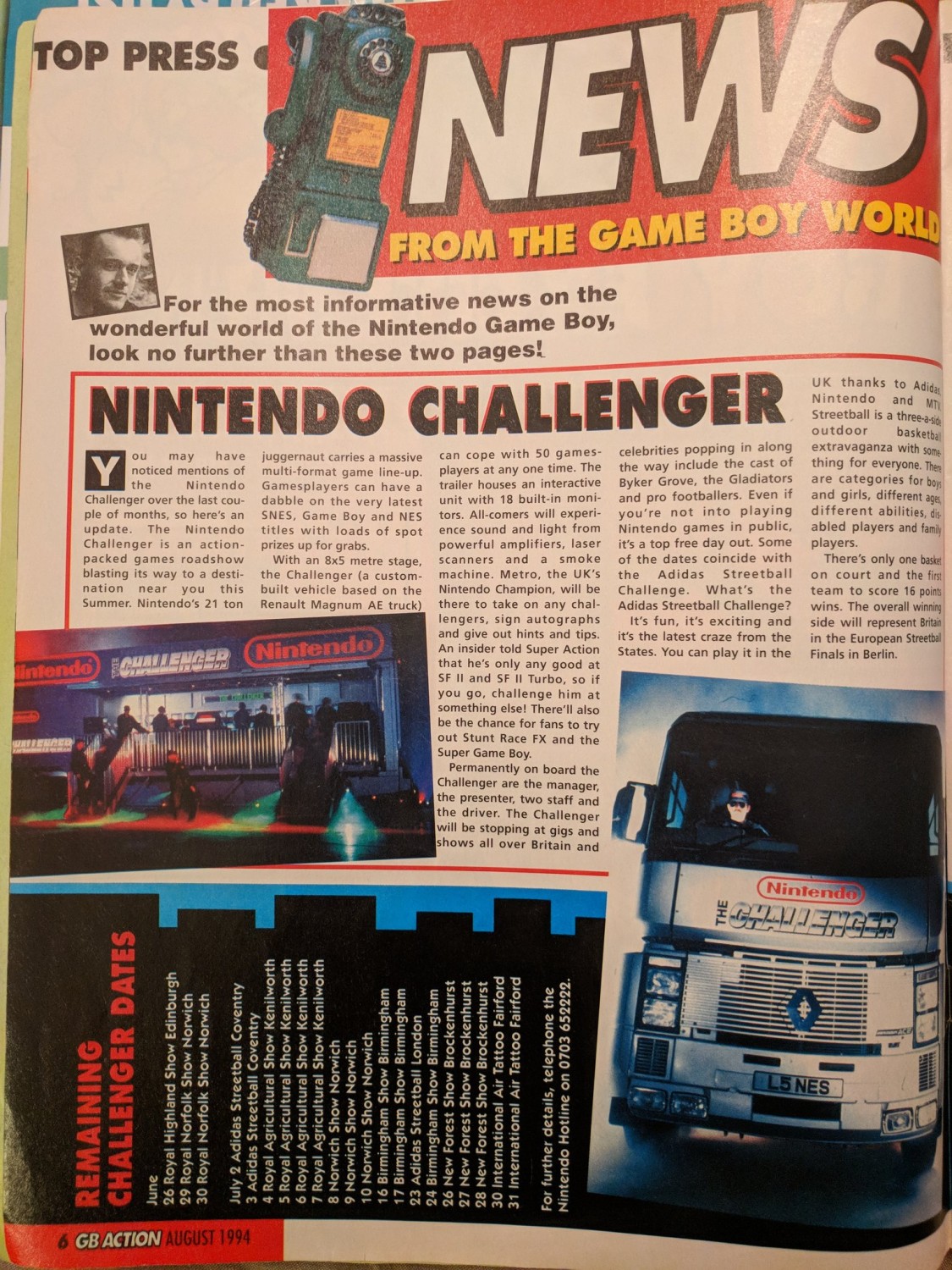
“21-tons of gameplay on wheels”, the Nintendo-branded Renault Magnum was a beast. Wielding the license plate “L5 NES”, the truck featured a huge array of games to play over the NES, SNES, and Gameboy. Previews of upcoming games were playable such as Super Metroid and FIFA International, as well as traditional favorites like Super Mario World.
 |
|---|
| Nintendo Challenger Truck. |
 |
 |
|---|---|
| Nintendo Challenger Outwards Facing. | Nintendo Challenger Advertisement. |
The truck opened outwards and formed a stage for everybody to play. It boasted an incredible 48 screens, booming sounds, lasers, and even dry ice.
Competitions were also held on the truck. However, unlike Sega’s bus competitions, which were held against other players, Nintendo’s were against a central persona.
Nintendo had finally come up with a solution to counter Sega’s “Jimmy”.
Introduced as a “real life gaming expert”, ‘Mighty Metro’ was a “22-year old full-time employee of Nintendo whose only role was to be the country’s best Nintendo champion.”
Prizes for beating Mighty Metro included t-shirts, games, and even consoles. Smaller participation prizes were also available, such as enamel pins. StarWing bomber-jackets were also given out (likely left-over from the Super StarWing Weekend Competition), with the driver of the truck also receiving one as a thank-you.
 |
|---|
| Nintendo Challenger Pin. |
The Challenger first appeared at The Future Entertainment Show (volume warning on that link) in 1993; a huge tradeshow hyping up all sorts of video games and arcade-related entertainment. After the show, the truck toured the whole of England, with dates and locations being published in magazines, newspapers, televisions, and even on the radio.
 |
|---|
| Nintendo Challenger Press Release. |
In 1994, Nintendo partnered with Adidas during its ‘Adidas Streetball Challenge’ marketing campaign to bring Streetball to Europe. At each of the streetball challenge locations, the challenger was waiting for players. Luring players to the Nintendo brand.
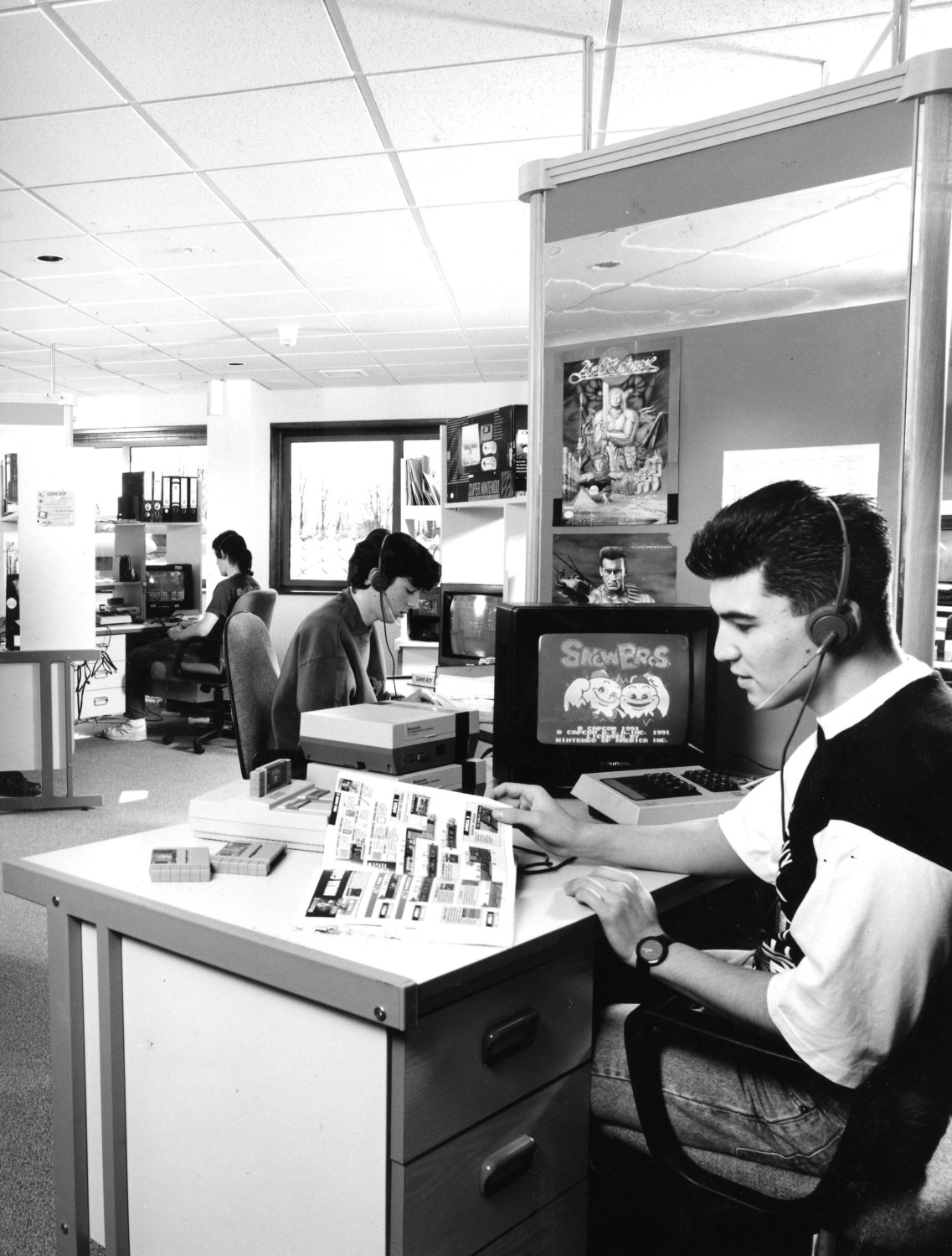 |
|---|
| Nintendo’s Eastleigh Offices. |
The truck was largely based out of Nintendo’s headquarters in Eastleigh (which also hosted Nintendo’s support hotline - see image on the left), and by the end of 1994 it was estimated that over 500,000 gameplays were tried on The Challenger.
In 1994, British TV personality, Ben The Boffin, from The Big Breakfast, also followed the tour too.
Unfortunately, the true identity of Mighty Metro is unknown. One of the drivers of The Challenger has said that “I think he was a family friend of one of the workers from Nintendo, I don’t think he was really an employee of Nintendo.”
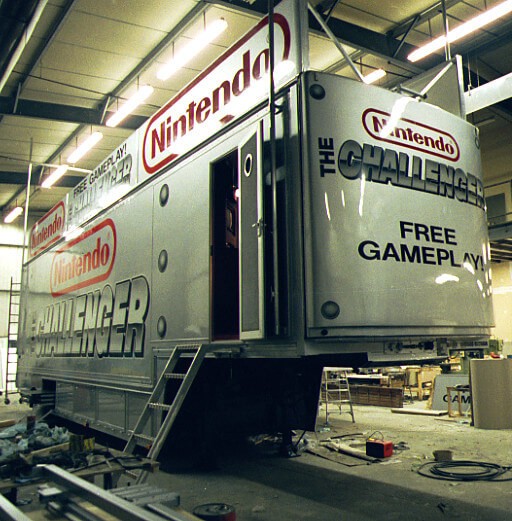 |
|---|
| Nintendo Challenger Build. |
The truck itself was made by a company named “Vipex”, which these days is called “Neat Vehicles.” Located in Sutton-in-Ashfield, the company still exists to this day, and were kind enough to pass archival photos over.
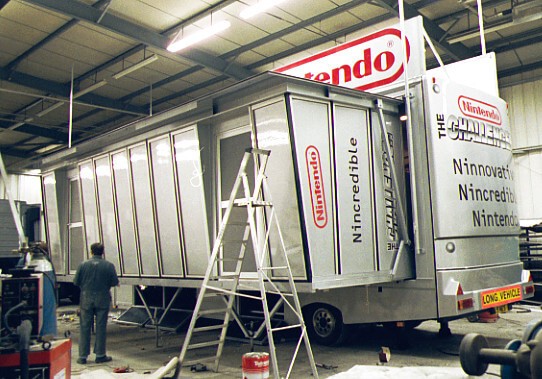 |
|---|
| Nintendo Challenger archival photo. |
The rig was finished on the 27th of October 1993 and the keys handed over to Nintendo, just two weeks before its big reveal.
In 1996, the rig was updated to coincide with the release of the Nintendo 64. The update was done by “Appleton Signs”, of Southampton.
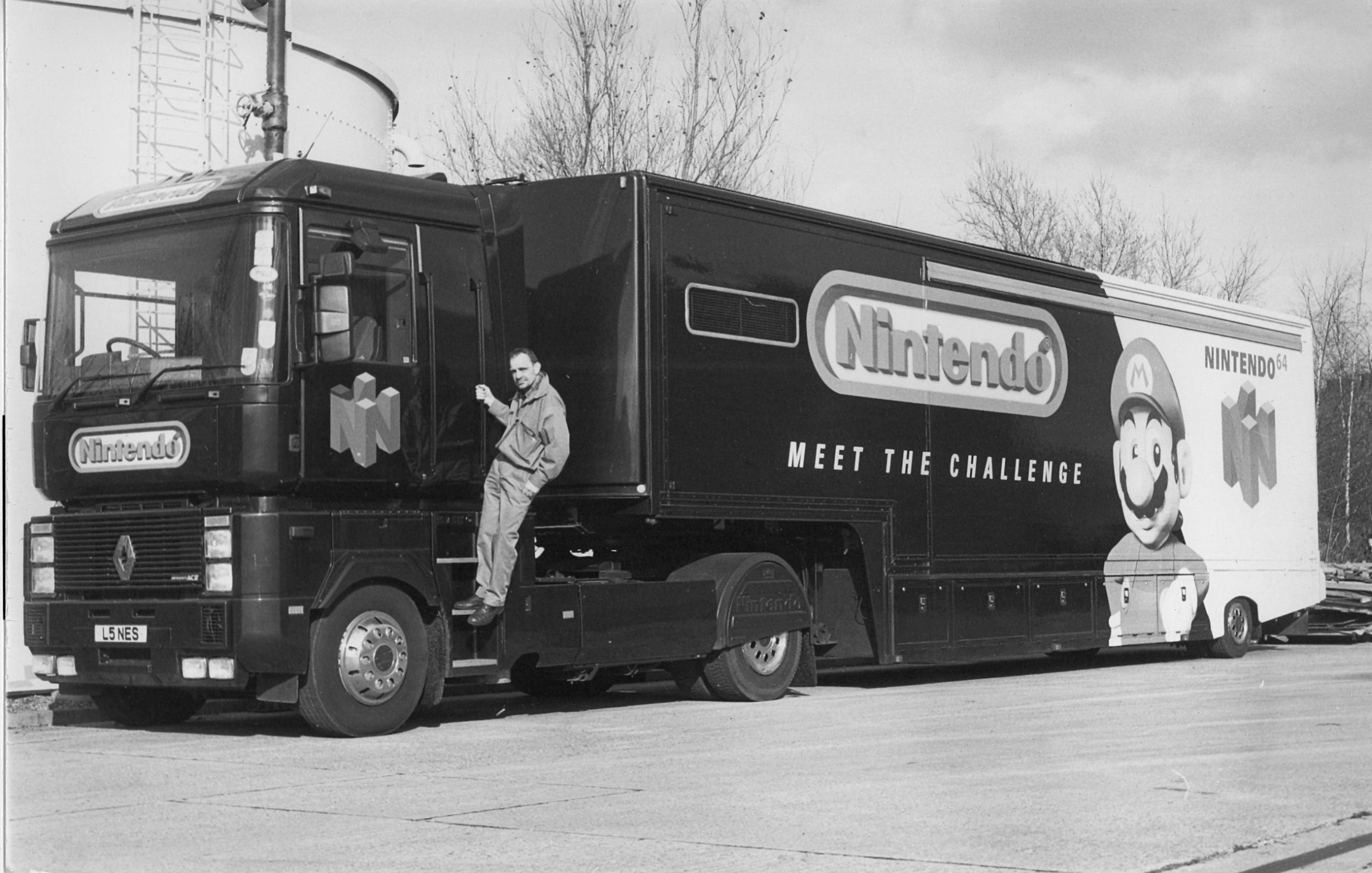 |
|---|
| Nintendo Challenger N64 “Meet The Challenge”. |
Previews of the N64 with various games were displayed in this version, with the updated slogan “Meet The Challenge.” Appleton Signs has an extensive document about their re-design of the vehicle, available on their website, with some more pictures.
Ultimately, in 1999, the reign of the Nintendo Challenger came to an end. The truck was converted into a racecar transporter, and its exterior painted over. For an advertising campaign that lasted 6 years, it is quite surprising that no information online exists about The Challenger. A few comments on different videos and articles may question “Does anybody remember the Nintendo Challenger?”, but ultimately, no more information prevails. One person I discussed The Challenger with said he felt like he had gone crazy, “because nobody else [knew what he] was talking about!”
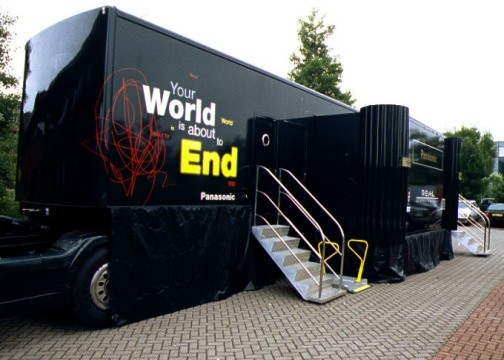
That’s not all, though. Also made by Vipex, Panasonic utilized a truck-tour for its console too.
 |
|---|
| Panasonic Showliner Truck. |
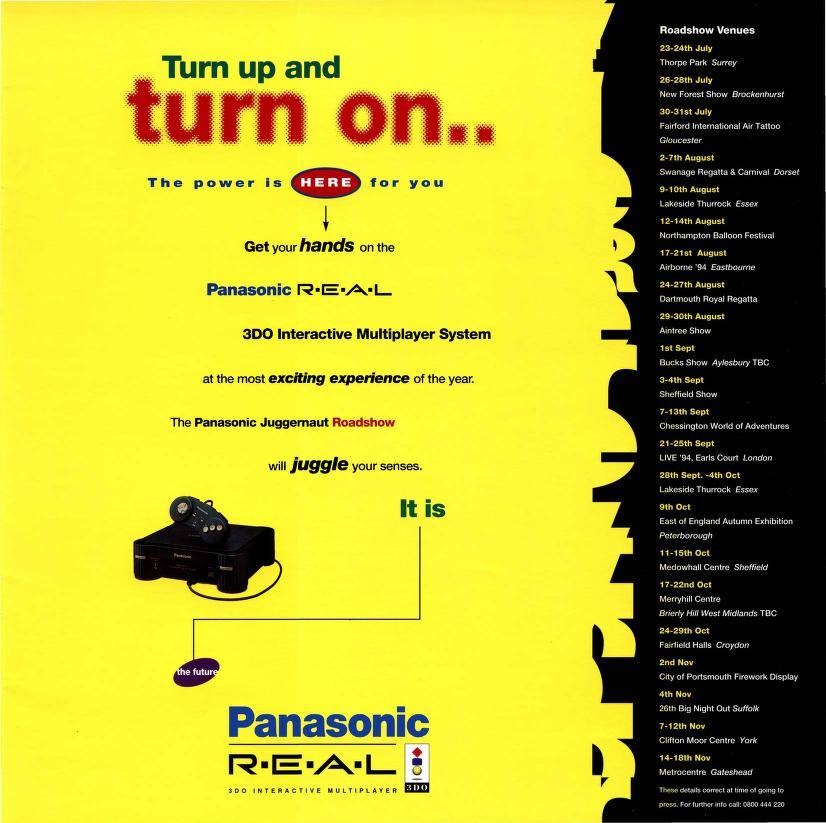
In the lead-up to the launch of the FZ-1 3DO system on the 4th of September, 1994, a truck similar to Nintendo’s toured between various dates in England from the 23rd of July until the 25th of November.
 |
|---|
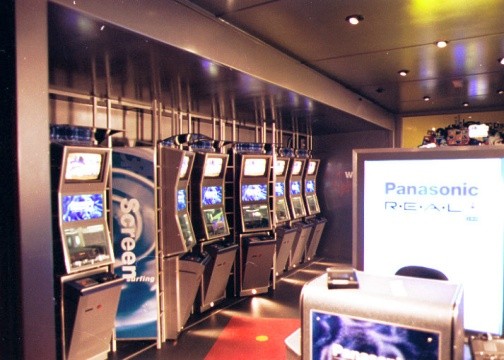
| Inside Panasonic Showliner. |
Titled the “Showliner”, and shaped like a 3DO FZ-1 system, it included game systems set up such that the public could try out the system before it was released. It ran for just one season.
 |
|---|
| Panasonic Showliner Truck Advertisement. |
Indeed, clearly Vipex knew their stuff.
More photos of the Showliner are available here.
England wasn’t the only country to get road-show tours.
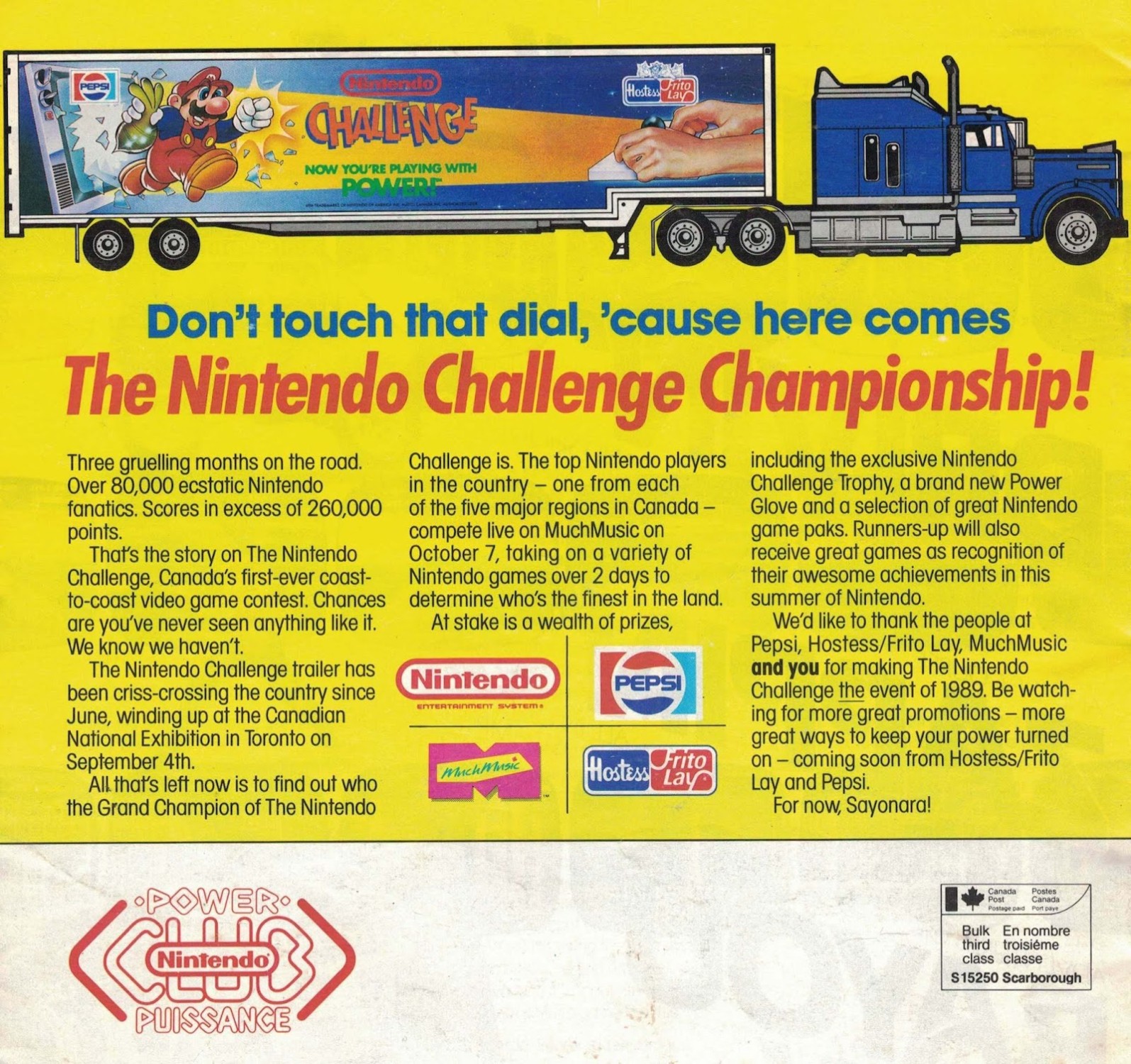
In 1989, the “Canadian National Challenge” was conducted as a truck tour, looking to find “the best NES player in Canada” (the competition ran in 1990 as well.)
 |
|---|
| Nintendo Canadian National Championship Challenge (Mattel). |
 |
|---|
| Scandinavian Nintendo Express bus. |
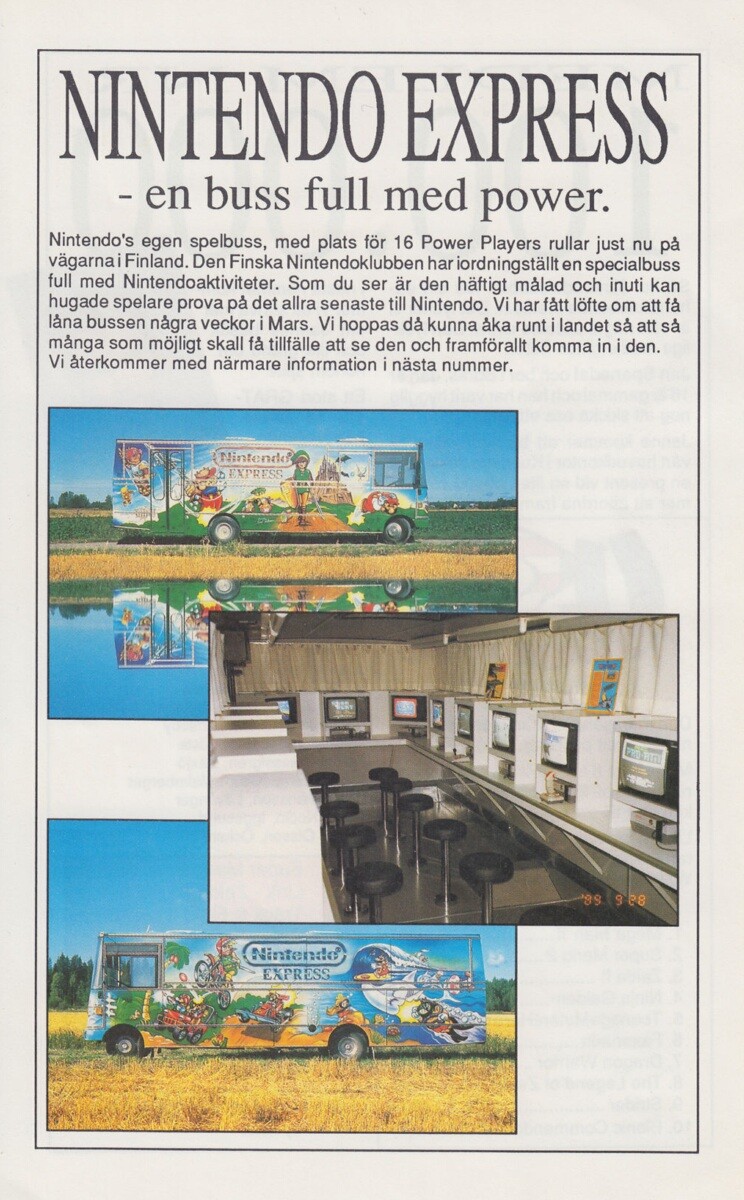
In Scandinavia, a travel-bus covered in nintendo-themed decorations travelled across Finland and Sweden. Titled the “Nintendo Express”, it donned the license plate “MAR10”. Children could play different gamess, and the bus was one of the first “bus tours” of its kind in the world.
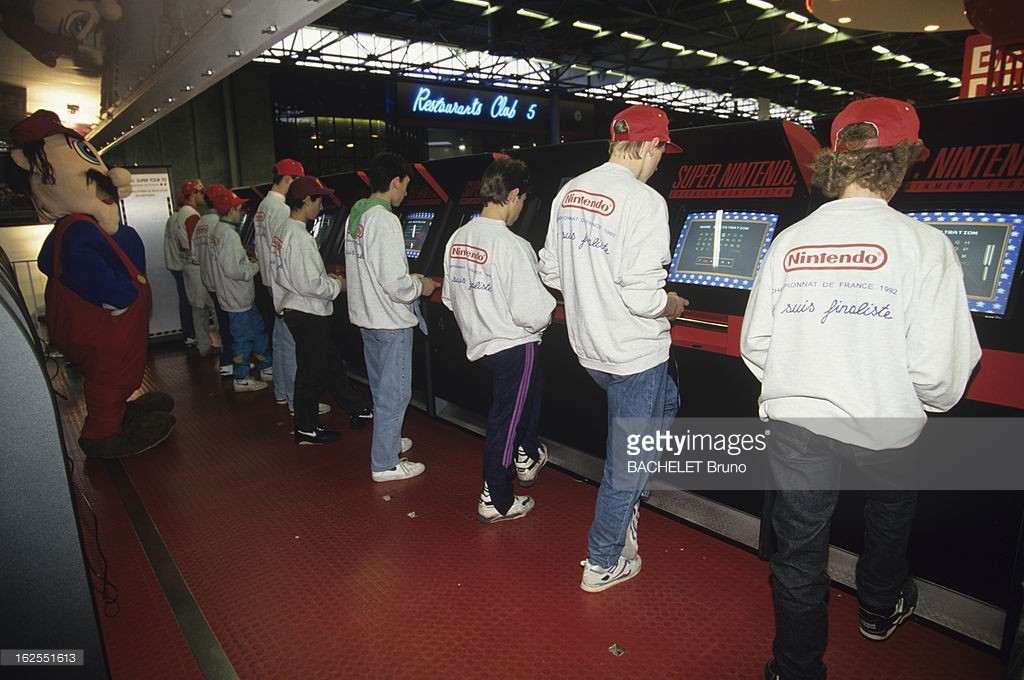
In France, the “Nintendo Super Tour of 1992” included two semi-trailers touring the country conducting trials for a nation-wide competition which was held in Paris later in the year.
[Embedded video: “Nintendo Super Tour ‘92 in France”]
Fascinatingly, the tour in France utilized two of the rarest NES and SNES games known to collectors. To begin the ‘Super Tour’, the “Nintendo Campus Challenge ‘91” cartridge, as it’s known, was used, to find the best NES players on tour.
In the video embedded above, you can clearly see the Nintendo Campus Challenge ‘91 cartridge being played; Super Mario, Pin*Bot, and Dr. Mario, all together (around the 2:42 mark.)
 |
|---|
| Nintendo Campus Challenge Cartridge. |
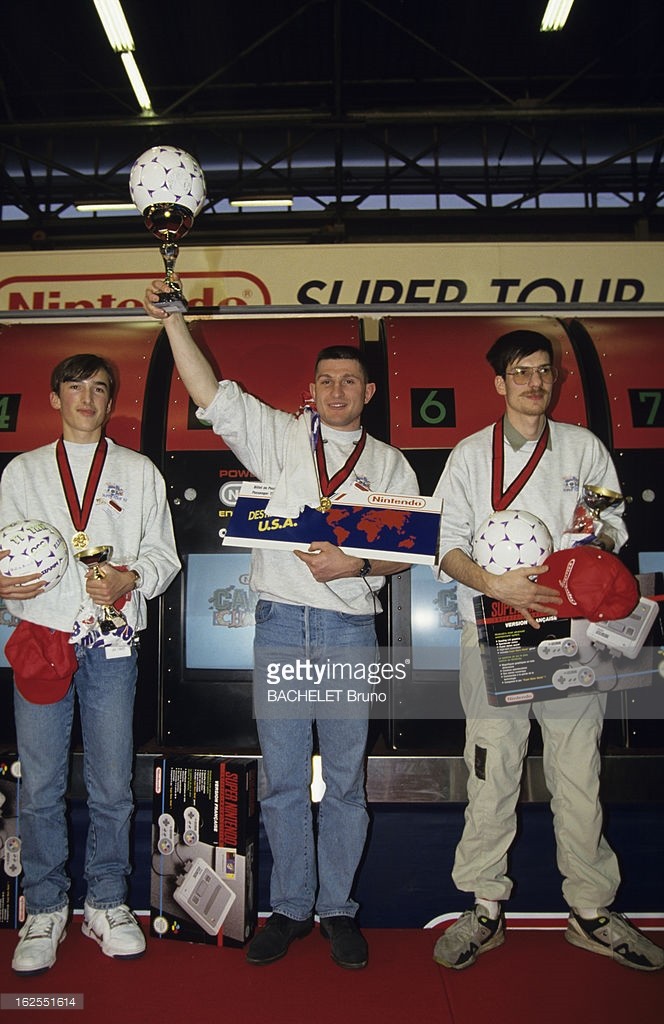
Local winners were invited to Paris for the national championship, where they played the “Nintendo Campus Challenge ‘92” game, on the SNES.
In the award ceremony photo, you can clearly see the Campus Challenge logo on the machines in the background.
 |
|---|
| Nintendo France Championship Campus Challenge SNES Cartridge. |
A Scandanavian-based competition was also held in 1992, where both Nintendo Campus Challenge cartridges were utilized. The winner of that competition won a trip with Disneyland Paris. An official Nintendo championship also occurred in Hungary around the same period, however, that’s for another time to explore, and is unlikely to have utilized either of the Campus Challenge cartridges.
Perhaps the most bizarre roadshow tour wasn’t even on a road.
In 1992, the ‘Sega Euro Challenge’ was a similar concept to other road-tours, however instead of a bus or a truck, it happened on a train.
[Embedded video: “Le train SEGA Euro Challenge”]
Carriages of a specialized train were converted to interactive play-rooms filled with Sega products, with visitors competing for the top score of various games, who then went on to the grand final in Paris, before a European Championship in England.
Indeed, as we’ve seen, the advertising campaigns of both Nintendo and Sega in the 1990s were both eclectic and eccentric. By responding to each others’ advertising campaigns, children all over the world got to enjoy video games in unique ways, which are rarely done anymore; only in 2019 did Nintendo once again introduce an interactive on-the-road tour, with a bus tour in the USA promoting the Nintendo Switch. Exploring these campaigns also offers new information about elusive games such as the Campus Challenge cartridges.